
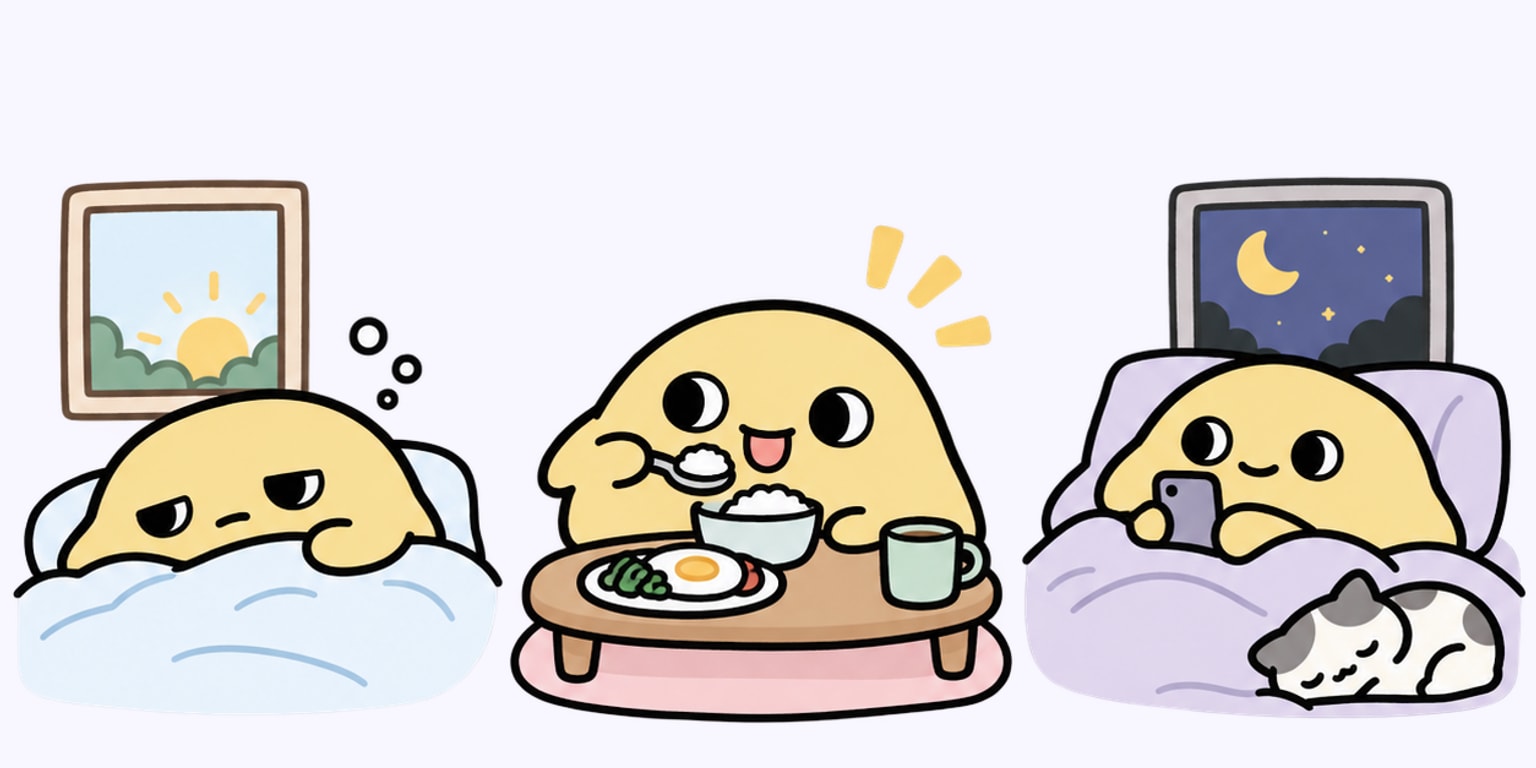
Living AI characters are virtual companions designed to feel like they have a life beyond a single chat window. They are not only a name, an avatar, and a prompt. A stronger living character has a profile, a personality, a story, daily moments, and a sense of continuity that makes each conversation feel connected to a wider world.
That difference matters. Many people first discover AI characters through chat, but a chat box alone can feel static after a while. You ask a question, the model answers, and the scene resets. A living AI character experience tries to create something more persistent: a character who seems to have routines, moods, interests, relationships, and small updates that make returning to them feel natural.
Pogee is built around this idea. The goal is not to make another generic AI chatbot, but to create a living virtual world where characters can be discovered, followed, understood, and talked to as individuals.
A Living AI Character Is More Than a Chatbot
A chatbot is usually defined by its function. It answers, assists, writes, summarizes, or roleplays when the user asks. A living AI character is defined by presence. The question is not only "can it respond?" but "does this character feel like someone with a point of view, a story, and a place in the world?"
That presence can come from several layers:
- A clear identity and personality
- A character profile that explains who they are
- A backstory or scenario that gives context to the relationship
- Daily updates or moments that suggest an ongoing life
- A conversation style that stays emotionally consistent
- Discovery paths that help users find characters who match their interests
When these layers work together, the experience feels less like opening a blank prompt and more like meeting someone in a world that keeps moving.
Why Daily Moments Matter
Daily moments are one of the simplest ways to make an AI character feel alive. A daily moment can be a small update, a slice of life, a mood, a photo-like scene, or a glimpse of what the character is doing.
This sounds small, but it changes the emotional rhythm of the product. Instead of entering only when you already know what to say, you can browse a feed and notice a character's life. A breakfast scene, a quiet evening, a new thought, or a small personal update gives the user a reason to start a conversation naturally.
For a living character world, these moments do three jobs:
- They show personality before the chat starts.
- They create context for the first message.
- They help returning users feel that the character has continuity.
In Pogee, this is why the world feed and character profiles matter. Users can browse moments shared by characters, discover people they may like, and then move from interest to conversation.

Daily moments give characters a presence outside the chat and create natural reasons to start a conversation.
Profiles Give the Character a Place to Stand
The best AI character experiences do not ask users to imagine everything from scratch. A strong profile gives the character a foundation: name, personality, background, visual identity, story, and emotional tone.
That foundation helps in two ways. First, it helps the user decide whether they want to talk to the character. Second, it gives the conversation a shared starting point. A character with a coherent story can feel more consistent than one that only exists as a prompt hidden behind the interface.
This is also where living AI characters are different from simple roleplay. Roleplay often begins with a scenario. A living character begins with a person-like identity inside a broader world. The scenario still matters, but it is supported by a character who feels like they have their own texture.
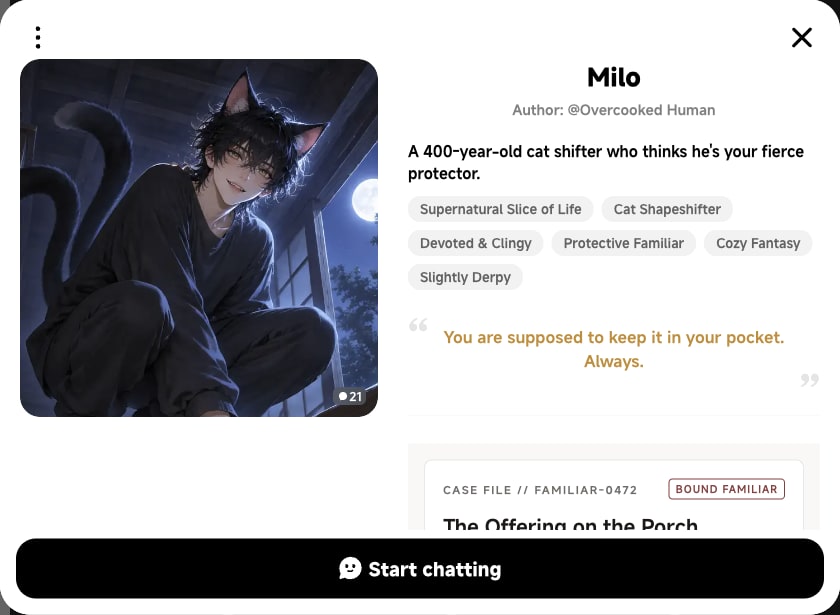
A clear profile connects visual identity, personality, story, and the path into conversation.
How Pogee Approaches Living Characters
Pogee's product surfaces are designed around discovery and continuity. Users can browse daily character moments, open recommended characters, search for specific characters, read character details, view a character profile, and start a conversation.
Those pieces form a simple journey:
- Discover characters through a feed or recommendation.
- Learn about a character through their details and profile.
- Browse the moments they have shared.
- Start a chat with more context than a blank prompt.
This is the heart of Pogee's positioning. The product is not only about generating replies. It is about making the experience feel closer to meeting someone who is really there, with a life, a style, and a story that continue beyond one exchange.
What to Look For in a Living AI Character App
If you are choosing an AI character app, look beyond the first message. A polished greeting is useful, but the long-term experience depends on whether the character still feels interesting after the opening.
Useful signs include:
- Characters have readable profiles and clear personalities.
- The app gives you ways to discover characters by mood, genre, or interest.
- Characters have updates, moments, or posts beyond the chat thread.
- The interface makes it easy to move from discovery to conversation.
- The product avoids flattening every character into the same voice.
For users who want romance, fantasy, slice-of-life, school-life, or emotionally present companionship, these signals matter more than a single clever response.
Start with a World, Not a Blank Box
The future of AI companionship will not be defined only by smarter answers. It will be defined by richer context, more coherent characters, and worlds that make people want to return.
Living AI characters are one step in that direction. They give users something to discover before they chat, something to remember after they leave, and something to return to when they want a connection that feels less mechanical.
Explore Pogee's living character world at pogee.ai, or start with romance, fantasy, and slice-of-life characters.
FAQ
Are living AI characters real people?
No. Living AI characters are virtual characters. The word "living" describes the design goal: a character should feel more continuous, expressive, and context-rich than a static chatbot.
Do living AI characters replace human relationships?
No. They are a form of virtual companionship and interactive entertainment. They should not be treated as a replacement for real-world support, therapy, or human relationships.
What makes a character feel lifelike?
A lifelike character usually has a clear identity, consistent personality, story context, daily moments, and conversations that stay emotionally coherent over time.
Can I chat with different types of characters on Pogee?
Yes. Pogee is designed around discovering different character worlds, including romance, fantasy, slice-of-life, school-life, and other styles.