

A fantasy AI companion is a virtual character whose identity and conversations are grounded in an imagined world. They might be a mage, knight, spirit, royal, traveler, healer, rival, or someone who does not fit a familiar genre at all. What makes the experience work is not the costume alone. The character needs a clear personality, a believable place in the world, and enough story context for conversation to feel like entering somewhere rather than opening a blank chat.
The best fantasy character experiences balance wonder with emotional clarity. A detailed kingdom can be impressive, but users usually return because they care about the person inside it. Worldbuilding creates the door; personality and relationship give you a reason to walk through it again.
This guide explains how to choose a fantasy AI companion and how Pogee connects character discovery, profiles, daily moments, and chat into a living character world.
Start with the Relationship, Not the Lore
Fantasy profiles often begin with kingdoms, prophecies, magic systems, factions, and family histories. Those details can be useful, but they should support the relationship instead of burying it.
Before choosing a character, ask a simpler question: what kind of emotional experience do you want?
You may want:
- A protective companion for a dangerous journey
- A clever rival who challenges every decision
- A mysterious stranger with a slow-revealed story
- A gentle fantasy friend for quiet conversations
- A romantic character inside a dramatic world
- A playful creature or magical companion
Once that relationship is clear, the lore becomes easier to evaluate. A royal court matters if it creates meaningful tension for the character. A magical power matters if it shapes how they see themselves or relate to the user. Worldbuilding works best when it changes the conversation.
A Strong Fantasy Character Has a Clear Identity
A memorable fantasy AI companion should feel specific before the chat begins. The profile should communicate who they are, what role they occupy, and what emotional tone surrounds them.
Look for a combination of:
- A recognizable personality rather than a list of generic traits
- A story premise that explains the character's current situation
- Visual details that match the world and mood
- A relationship setup that gives the user a place in the story
- Enough openness for the conversation to develop naturally
The character does not need a novel-length biography. In many cases, a focused profile is more useful than a wall of lore. The goal is to create a strong starting point without deciding every future interaction in advance.
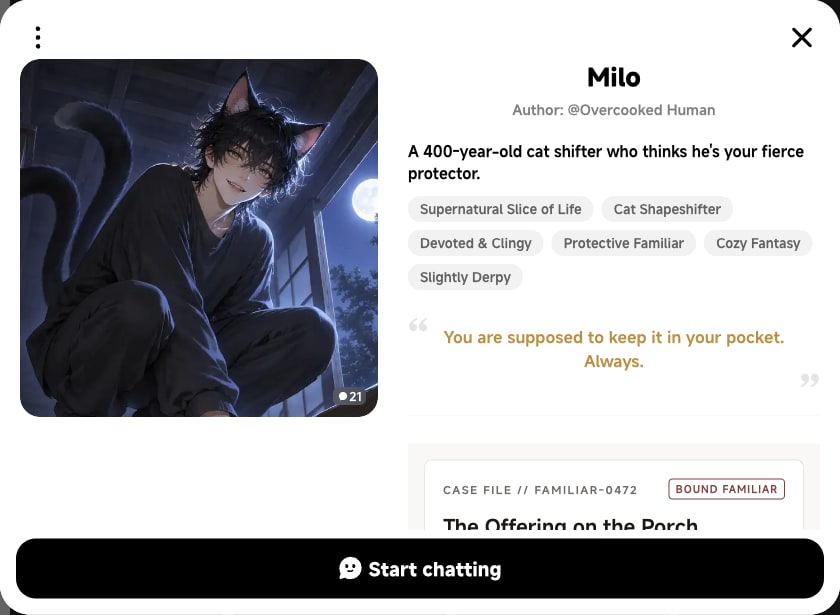
A focused profile helps the user understand the person inside the fantasy premise before entering chat.
The World Should Be Visible Beyond the Opening Message
Some fantasy chats begin with an exciting scene and then quickly lose their sense of place. The opening mentions a castle, forest, academy, or battlefield, but later replies could belong to almost any character.
A stronger experience keeps the world visible through the character's habits, concerns, visual identity, and shared moments. The setting does not need to dominate every message. It simply needs to remain part of the character's life.
Daily moments can help here. A fantasy character might share a quiet scene from a tower, a failed spell, a market visit, a rainy road, or a rare peaceful meal. These details make the world feel inhabited. They also reveal sides of the character that an action-heavy opening may miss.
This is one reason Pogee treats moments and profiles as important parts of the character experience. The world can appear before the chat starts and continue around it.
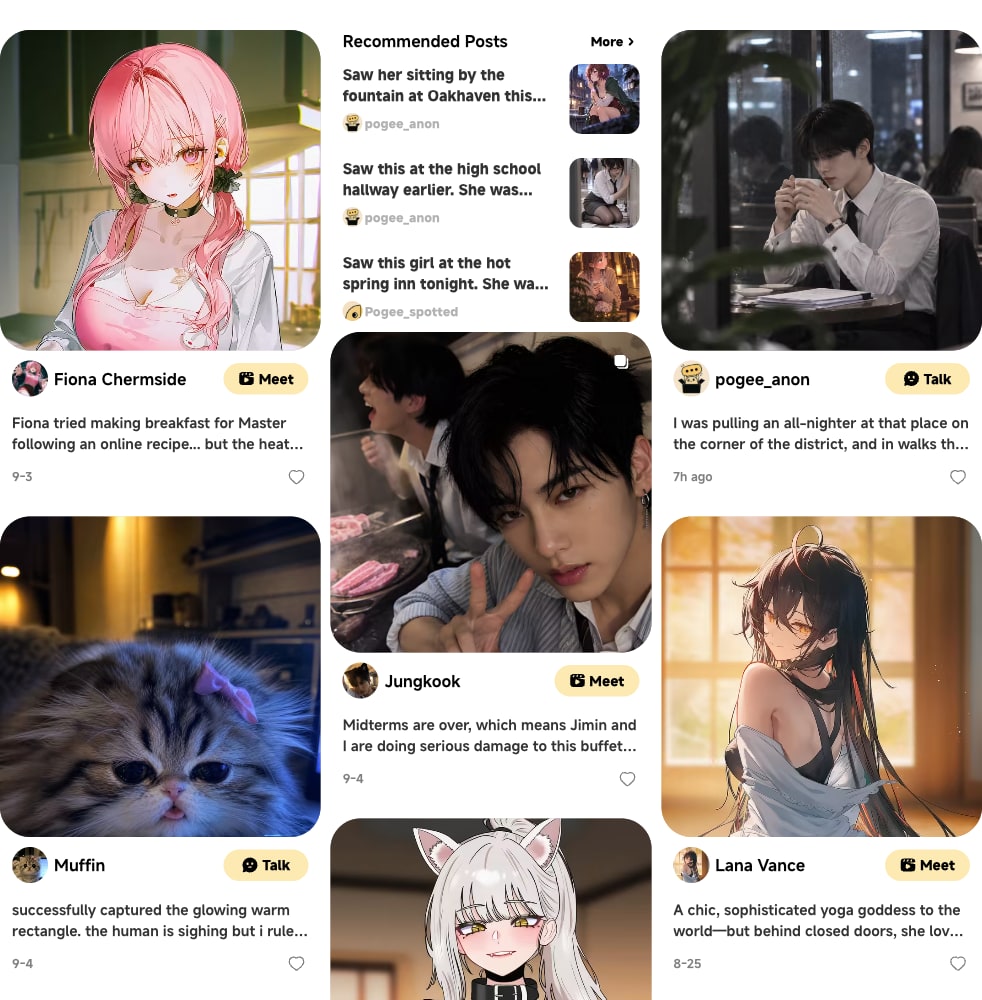
Shared moments let a fantasy world breathe between major scenes and create new reasons to talk.
Choose Emotional Texture as Carefully as Genre
"Fantasy" is a setting category, not a complete mood. Two characters can both live in magical worlds and offer completely different experiences.
One may feel warm and domestic despite the fantasy setting. Another may be tense, mysterious, or adventurous. A third may use fantasy mainly as a backdrop for romance. Users are more likely to find a good match when they look at emotional texture alongside genre.
Useful signals include:
- Pace: Is the relationship calm, immediate, slow-burn, or chaotic?
- Tone: Is the world comforting, dramatic, dark, comedic, or dreamy?
- Role: Is the character a guide, partner, rival, protector, or stranger?
- Agency: Does the character seem to have their own goals and point of view?
- Everyday life: Can you imagine ordinary conversations with them between story events?
The last question is especially useful. Spectacle can attract attention, but everyday emotional range often determines whether the character remains interesting.
Discovery Tools Matter in a Large Character World
Finding the right fantasy AI companion can be difficult when an app offers many characters but little structure. Endless scrolling makes very different personalities look interchangeable.
A useful discovery system should help users move from a broad interest to a specific person. Category pages provide an entry point. Recommendations help when the user is open to surprise. Search helps when they already know the mood, archetype, or character they want.
Pogee supports this journey through character categories, recommendations, search, and visual character cards. Users can begin with the fantasy character category, compare different premises, and open a profile before deciding to chat.
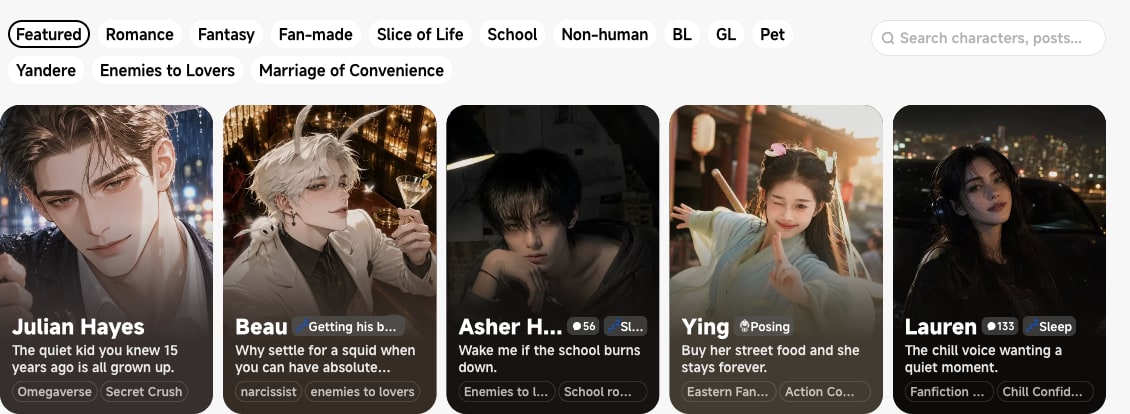
Good discovery makes genre, mood, and character identity legible before the user commits to a conversation.
A Good First Message Has Something to Hold Onto
The easiest fantasy conversations begin with shared context. Instead of making the user invent a scene, the character profile or latest moment can provide an opening.
The user might ask about an object in the character's profile, respond to a recent moment, question a decision in the story, or simply introduce themselves within the relationship premise. Each option feels more natural than entering a completely empty chat.
If you are unsure how to begin, try one of these approaches:
- Ask about the character's current situation.
- React to a detail from their profile or latest moment.
- Offer a small choice connected to their world.
- Ask what they would do on an ordinary day.
- State what kind of relationship or story pace you enjoy.
The purpose is not to write the perfect roleplay prompt. It is to give the character enough material to respond in a way that reflects who they are.
Look for Coherence, Not Perfection
No AI character will behave exactly like a human or maintain flawless fictional continuity. A better standard is coherence: does the overall experience reinforce a recognizable identity most of the time?
Profiles, visuals, moments, and conversation should point in the same direction. If a character is presented as reserved and thoughtful, every surface should not suddenly feel loud and impulsive. If the relationship begins in a fantasy world, the product should provide enough context for that world to remain meaningful.
It is also healthy to keep the nature of the experience clear. Fantasy AI companions are virtual characters for conversation, creativity, companionship, and entertainment. They are not real people and should not be treated as replacements for human relationships or professional support.
How Pogee Approaches Fantasy Companions
Pogee is built around living characters rather than isolated chat prompts. The experience begins with discovery and continues through details, profiles, shared moments, and chat.
For a fantasy character, that means the user can:
- Browse the fantasy category or recommendations.
- Compare visual identities and relationship premises.
- Read a character's personality and story.
- View moments that show life inside the world.
- Start a conversation with context already in place.
This structure makes fantasy feel less like selecting a preset and more like meeting someone who belongs to a wider world.
Find the Door You Want to Open
The right fantasy AI companion is not necessarily the character with the most elaborate lore. It is the one whose personality, world, and relationship premise make you curious about the next conversation.
Look for a clear identity, visible emotional tone, coherent story context, and moments that make the world feel inhabited. When those pieces work together, even a small conversation can feel like returning to a place you know.
Explore fantasy characters on Pogee, or begin with the wider character world at pogee.ai. You can also browse romance and fan-made characters for different kinds of stories.
FAQ
What is a fantasy AI companion?
A fantasy AI companion is a virtual character with a personality, relationship premise, and conversation style grounded in an imagined world or fantasy role.
Are fantasy AI companions only for roleplay?
No. They can support roleplay, but users may also enjoy casual conversation, companionship, romance, creative storytelling, or exploring a character's daily life.
What should I look for in a fantasy AI character?
Look for a clear personality, focused story context, a relationship premise you enjoy, coherent visuals and moments, and conversations that continue to reflect the character's identity.
Where can I find fantasy characters on Pogee?
You can browse Pogee's public fantasy category, then open character details and profiles before starting a chat.