
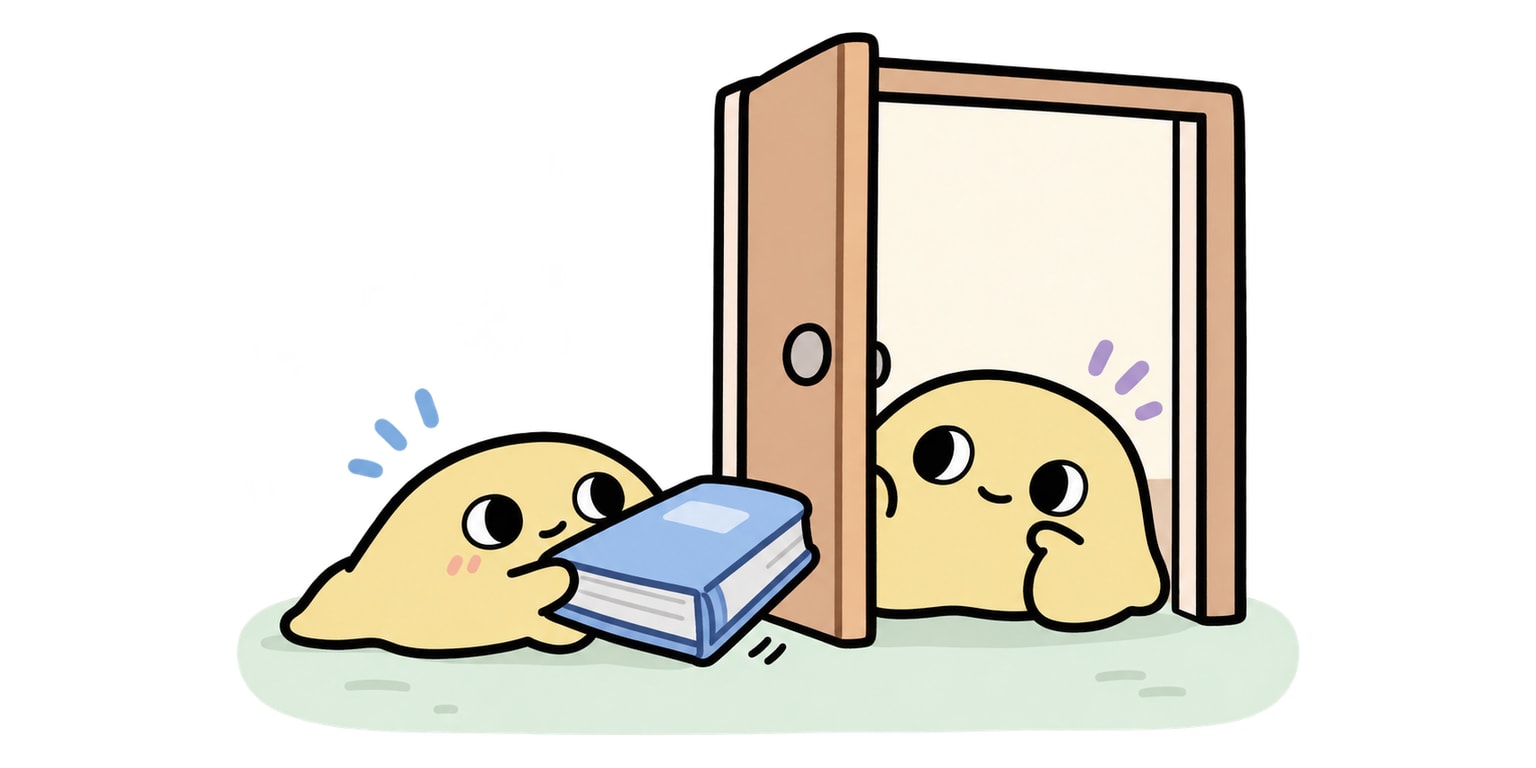
The character asks the question you just answered. A scene ends with the same smile for the fourth time. You request a recommendation and receive another invitation to explain what you like. The replies are arriving, but the conversation is not going anywhere.
Start by naming what is repeating, then ask for one specific change in the next reply. Repeated wording, an unresolved question and a stalled scene need different responses. A long recap is not always useful when the character already has the facts but keeps circling the same moment.
This is a practical guide to trying a different next turn, not a guaranteed repair or a diagnosis of a service's model. The examples below are invented writing examples, not chat logs, official Pogee character lines or tested outcomes.
First Check: A Repetitive Reply or a Duplicated Message?
If the exact same message appears twice with no new content, first check whether you are seeing duplicate delivery or a display problem. That is different from a newly generated reply that uses familiar words. Look at the visible sequence and whether your previous message actually appeared before sending it again.
If a message is pending, let the current operation finish rather than repeatedly tapping send. If the interface remains stuck or the same issue continues across unrelated conversations, consult that service's current help or status information. A clever prompt cannot establish whether delivery is working. Avoid clearing app data, deleting the conversation or buying an upgrade as an unverified fix.
If each new response is different but keeps returning to the same question, phrase or action, use the conversation checks below. You do not need to know the hidden cause before deciding what you would like to change.
Identify the Loop Before Choosing a Reply
Read a few recent exchanges together, not just the latest sentence. Ask what changed after your last message:
- A repeated phrase: different answers keep using the same expression, gesture or pet name.
- A repeated question: you answer, but the character asks for the same information again.
- A stalled scene: the wording varies, yet everyone stays at the doorway, about to act.
- An unanswered request: the reply acknowledges you but never gives the recommendation, choice or explanation you asked for.
- A wrong fact returning: the character keeps using a location or event you already corrected.
That last case is mainly a continuity problem. Our guide to AI character memory and recaps explains how to state the relevant fact accurately. For the other patterns, focus on the next response's content or shape instead of rebuilding the entire history.
Repetition alone does not reveal a model's settings, memory capacity or intention. It is not proof that the character is bored, upset with you or deliberately withholding an answer. You have not failed at chatting because a generated exchange became repetitive.
When the Same Phrase Keeps Coming Back
Suppose several replies start with "a mischievous smile" even though the conversation has changed. "Stop repeating yourself" names the frustration, but leaves the desired alternative open.
Try naming the pattern and offering a positive replacement:
"For the next reply, skip the smile description and answer in dialogue. Tell me which book you would lend me and one reason you chose it."
This changes two observable things: the stock gesture is unnecessary, and the reply has a concrete subject. It does not require the character to become a different person. You can keep a playful voice without using the same stage direction every time.
If the issue is an unwanted nickname, be direct:
"Please use my character's name, Rowan, instead of a pet name. What did you want to show Rowan in the library?"
You can judge the next reply by whether it respects that preference and answers the question. There is no need to negotiate with the software about whether the preference is reasonable. If a boundary is repeatedly ignored, leaving is a valid response.
When It Asks the Question You Just Answered
Imagine this invented exchange:
Character: "Would you rather visit the garden or the market?"
You: "The garden. I'd like somewhere quiet."
Character: "Of course. So, garden or market?"
Instead of repeating your full answer, close the choice and move to its consequence:
"The garden is decided; we don't need to choose again. Once we arrive, which quiet spot would you show me first?"
This separates an established choice from the next open question. A useful next reply would name a spot or describe arriving there, rather than reopen the destination vote. That is a criterion for reading the response, not a prediction that it will comply.
If you want to leave the choice to the character, narrow that request too: "Choose one place yourself and tell me why. Please don't turn the choice back into a question for me." You can invite a fictional opinion without claiming the character has independent real-world preferences.
When the Scene Never Moves Past the Doorway
In a stalled scene, each response may be fluent while repeating the same beat: reaching for the handle, looking back, waiting, reaching again. Adding more atmospheric detail can leave the action unresolved.
Offer one small transition that your character controls, then leave the other character room to respond:
"I open the door and step into the workshop. On the nearest table, I notice a covered object. What do you tell me about it?"
This gives the next turn a new location and one focus. It does not dictate that the other character suddenly trusts you, reveals every secret or falls in love. The transition is a story proposal; if it conflicts with the setup, you can choose a smaller step that fits.
If you prefer not to write an action, state the pacing request plainly: "Let's move past the entrance. Please describe one thing that happens inside the workshop, then leave my response open."
Our AI roleplay guide covers shared choices and point of view in an ongoing scene. Here, the narrower goal is to stop replaying one beat, not to write a more elaborate opening.
When the Reply Acknowledges You but Never Answers
Sometimes the loop is not repeated language. You ask for one book and receive "There are so many wonderful options. What kind do you like?" After you explain, the next reply praises your taste and asks again.
Try a bounded answer request:
"Please recommend one mystery novel now. Give the title and a spoiler-free reason in two sentences. You don't need to ask another preference question first."
The response now has an easy-to-check job: one recommendation and one reason. It can still be wrong about a real book, author or plot, so verify factual details independently. Fluency and specificity are not evidence of accuracy.
For a purely fictional setting, you might instead ask, "Invent one book from your world's library, and make clear that it is fictional." That avoids confusing a story prop with a real recommendation.
Change One Thing, Then Read What Actually Changed
You do not need to paste a complicated anti-loop prompt. Choose the smallest adjustment that matches the pattern:
- Name the observable issue: the destination question is being repeated.
- Close or replace it: the garden has already been chosen.
- Ask for one next step: name the first spot to visit there.
- Read the result: did the reply take that step, or reopen the same choice?
If the next reply improves, continue naturally. If it does not, decide whether another attempt is worth your time. There is no mandatory number of retries, magic word count or universal instruction that removes repetition.
Changing many things at once makes it harder to tell what you actually liked. You might get a longer response that still repeats the same event. More text is not the same as more progress; a short answer that resolves the question may be enough.
Do not use private information as novel material to force a different reply. Invented names, ordinary preferences and fictional locations are sufficient. Our AI character chat privacy guide shows how to preserve useful context without adding identifying details.
What About Regenerate, Edit or New Chat?
Some services provide alternate replies, editing or separate conversations. Only use controls you can actually find in the current product, and check what they change before using them. This guide does not claim that Pogee offers any particular retry, branch, deletion or model-setting control.
If an alternate-reply option exists, read the replacement before continuing. Different wording may still repeat the same question or stall at the same action. If editing is available, do not mistake an exchange you edited into the history for something the character recalled unaided.
A new chat may leave earlier context behind; it is not a guaranteed fix. Keep any story note you want to retain somewhere you control before taking a destructive action. Do not delete an old thread just to test whether the next one feels different.
When the conversation is no longer enjoyable, a different topic, another character or a break is enough. You do not owe an AI character a repaired ending.
A Fresh Topic Can Be Simpler Than Repairing the Scene
On Pogee, character profiles and daily moments offer material beyond the current chat. If you would rather change direction, look for one detail actually visible on a profile or post and ask about that. Our daily-moments guide explains how those cues can support a new topic.
For example, if a visible post shows a breakfast, "What would you make differently next time?" gives the conversation a new focus. Do not invent the post or assume that it proves the character remembered a private breakfast discussion.
Explore Pogee's characters when you want a different conversation. Access and sign-in steps may apply before chat. Profiles, posts and generated replies belong to a fictional experience, not a guarantee of independent awareness, perfect continuity or repetition-free conversation.
FAQ
Why does my AI character keep repeating itself?
The repetition is observable, but the cause is not reliably identifiable from the replies alone. First distinguish duplicate message delivery from newly generated repetitive content. Then identify whether wording, a question or an unresolved scene beat is repeating, and decide what you want the next reply to do differently.
Is repetition always a memory problem?
No. A wrong fact returning may call for an accurate correction or recap, but a repeated gesture or unanswered request can occur without an obvious missing fact. Match your next message to the visible problem rather than assuming one hidden cause.
Can one prompt permanently stop an AI chat loop?
No prompt guarantees that. A specific next-step request can communicate your preference, but the response can still repeat or ignore it. Judge what actually changes, and stop trying whenever you prefer.
Should I start a new chat or pay for a different plan?
Neither is a verified fix for repetition. A new chat may lose continuity, and a plan change only provides the features described in its current terms. Try a small, non-destructive change first if you want to continue; changing topics or leaving is also reasonable.